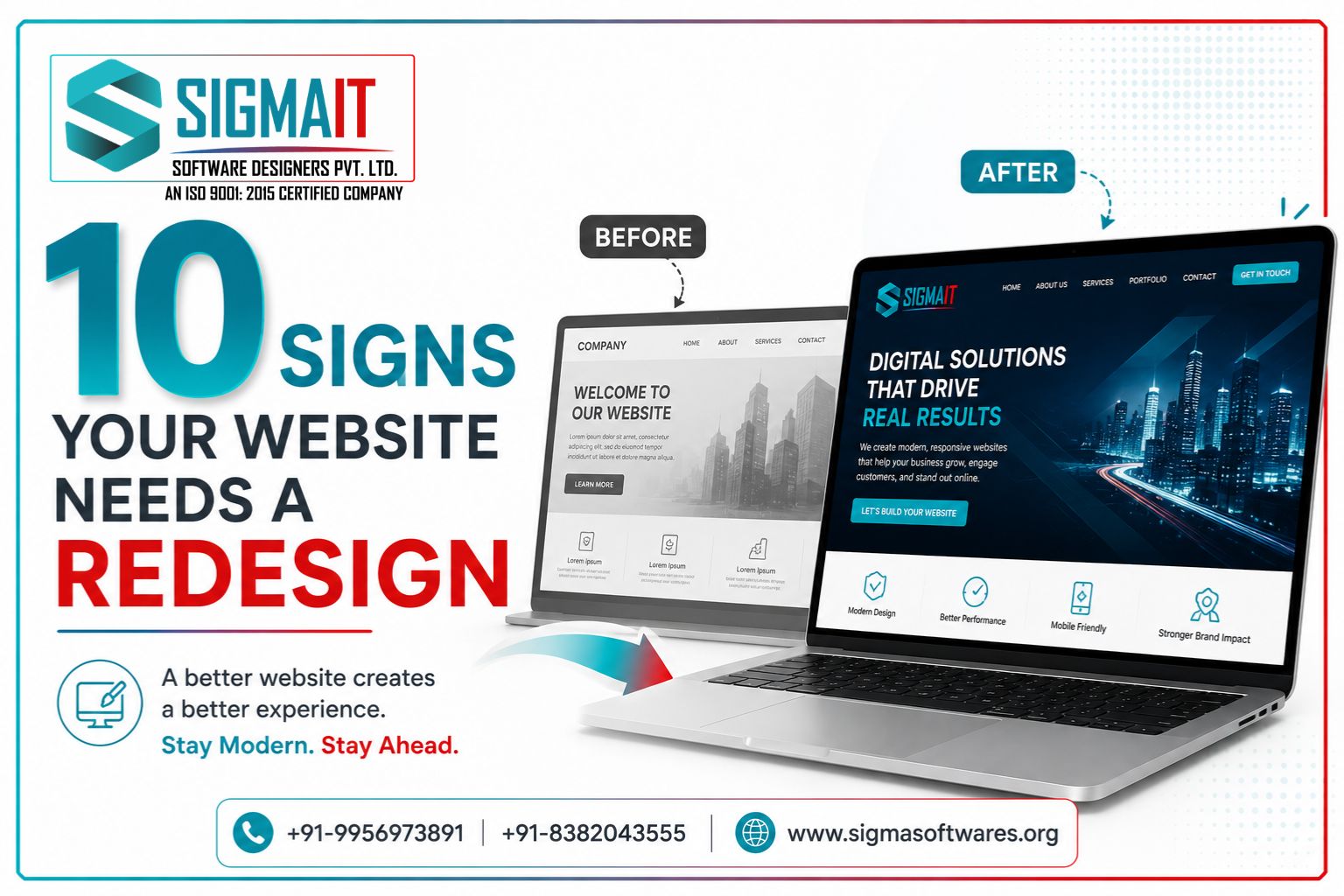
10 signs your website needs a redesign
by
SigmaIT Softwares
Posted on 5/7/2026 6:44:32 PM
10 Signs Your Website Needs a Redesign in 2026 for Better SEO & Growth
In today’s digital world, your website is often the first impression customers get about your business. A modern website is no longer just about good design. It must load fast, work smoothly on mobile devices, rank well on Google, and help visitors become customers.
As technology and customer expectations continue to change, many businesses are now realizing that their old websites are affecting traffic, leads, and sales. If your website looks outdated or performs poorly, it may be time to invest in a professional highlight website redesign.
In this article, we will explain the top signs that show your business website needs an upgrade in 2026 and how a modern website can help your business grow online.
Why Website Redesign Matters in 2026?
A website designed five years ago may no longer meet current digital standards. Search engines now focus heavily on user experience, mobile performance, page speed, and quality content.
Modern users expect websites to load quickly, look professional, and provide easy navigation. If your website fails to meet these expectations, visitors may leave within seconds and choose your competitors instead.
A properly planned highlight website redesign can improve:
-
User experience
-
Search engine rankings
-
Mobile responsiveness
-
Website speed
-
Lead generation
-
Brand trust
-
Customer engagement
Businesses investing in highlighting modern website design are seeing better online visibility and higher conversion rates in 2026.

Website Redesign for Lead Generation: Turn Traffic Into High-Quality Leads in 2026
A modern website redesign for lead generation helps businesses improve user engagement, build trust, and increase conversions. When users visit your website, they expect fast loading pages, mobile-friendly layouts, easy navigation, and clear information. If your website cannot deliver a smooth experience, visitors leave quickly and move to competitors.
A professionally redesigned website focuses on user behavior and customer journey. It guides users toward actions such as filling contact forms, calling your business, requesting quotes, or making purchases. This is why businesses are now investing in lead generation website design instead of simple informational websites.
An SEO-friendly redesign also improves your visibility on search engines. Better rankings bring more targeted traffic, while optimized landing pages help convert that traffic into quality leads. Features such as strong call-to-action buttons, WhatsApp integration, fast loading speed, and trust-building content play a major role in improving conversions.
Is Your Website Killing Your Conversions? What You’re Missing
Many business owners do not realize that their website may be the biggest reason behind low inquiries and poor sales performance. Even if your website gets traffic, an outdated design or poor user experience can stop visitors from becoming customers.
One of the most common problems is slow website speed. Users in 2026 expect websites to load within seconds. If pages take too long to open, visitors leave immediately. Google also considers page speed as an important ranking factor, which affects both traffic and conversions.
Another major issue is poor mobile responsiveness. Most Indian users now browse websites through smartphones. If your website does not work properly on mobile devices, users struggle to navigate pages, read content, or contact your business.
Weak call-to-action sections are another reason for low conversions. Many websites fail to clearly guide users toward the next step. Without visible contact forms, enquiry buttons, or trust signals, visitors often leave without taking action.
Outdated design elements also reduce customer trust. Old layouts, poor visuals, broken pages, and confusing navigation make businesses appear unprofessional. Modern users judge brand credibility within seconds of opening a website.
Your website may also be missing important SEO elements such as optimized headings, structured content, proper internal linking, and fast-loading pages. Without these features, even good content may struggle to rank on search engines.
A strategic website redesign helps solve these issues by improving user experience, increasing engagement, and creating better conversion opportunities. Businesses that regularly update their websites often see higher traffic retention, better rankings, and improved lead generation results.
Role of UX, CRO, and SEO in Lead Generation
A successful lead generation website is built on three important pillars -
-
UX (User Experience Design)
-
CRO (Conversion Rate Optimization)
-
SEO (Search Engine Optimization)
These three elements work together to improve website performance, user engagement, and customer conversions.
1. UX (User Experience Design)
User Experience Design (UX) focuses on making websites simple, smooth, and user-friendly. A good user experience helps visitors easily find information, browse pages comfortably, and complete actions without confusion.
In 2026, users expect clean layouts, fast-loading pages, mobile responsiveness, and intuitive navigation. If a website feels difficult to use, visitors quickly leave and search for alternatives.
Good UX design includes proper menu structures, readable fonts, engaging visuals, and organized content sections. It also focuses on reducing unnecessary distractions and improving overall website accessibility.
A user-friendly website increases visitor trust and encourages users to stay longer, explore services, and contact the business. This directly improves lead generation and customer engagement.
2. CRO (Conversion Rate Optimization)
Conversion Rate Optimization (CRO) is the process of improving website elements to increase the percentage of visitors who take action. These actions may include submitting enquiry forms, making calls, booking services, or purchasing products.
Many businesses get traffic but fail to convert visitors because their websites are not optimized for conversions. CRO helps identify these gaps and improves user journey strategically.
Important CRO elements include:
-
Strong call-to-action buttons
-
High-converting landing pages
-
Easy contact forms
-
Trust signals and testimonials
-
Clear service information
-
Fast loading speed
Small changes in design and content placement can significantly improve lead generation results. For example, placing enquiry buttons above the fold or simplifying contact forms can increase conversions.
A conversion-focused website redesign ensures that every section of the website supports business goals and encourages users to take action.
3. SEO (Search Engine Optimization)
Search Engine Optimization (SEO) helps websites rank higher on Google and attract targeted organic traffic. Without SEO, even a well-designed website may struggle to reach potential customers.
Modern SEO in 2026 is not limited to keywords only. Search engines now focus on user experience, content quality, page speed, mobile responsiveness, and website structure.
An SEO-friendly website includes:
-
Optimized headings and content
-
Fast loading pages
-
Mobile-first design
-
Proper keyword placement
-
Internal linking structure
-
Technical SEO optimization
-
Schema implementation
SEO helps businesses attract users who are actively searching for products or services online. When combined with strong UX and CRO strategies, SEO generates high-quality traffic that is more likely to convert into leads.
Losing Leads? - 10 Signs Your Website Needs Redesign
We have listed here 10 clear signs those will show you it's a time for your website needs redesign in 2026:
1. Your Website Looks Outdated
One of the biggest signs your business needs a highlight website redesign services provider is an outdated design.
Old-style layouts, poor font choices, low-quality images, and cluttered pages can make your business appear unprofessional. Customers often judge a company within seconds of visiting its website.
Modern websites use clean layouts, professional visuals, proper spacing, and mobile-friendly interfaces to create trust and improve user engagement.
If your website still looks like it belongs to an older decade, it may be affecting your credibility and customer confidence.
2. Your Website Is Not Mobile-Friendly
Today, most users browse websites using smartphones. Google also uses mobile-first indexing, which means the mobile version of your website plays a major role in SEO rankings.
If visitors need to zoom in, scroll excessively, or struggle to click buttons on mobile devices, your website is hurting user experience.
A responsive and highlight mobile friendly website automatically adjusts to different screen sizes and provides a smooth browsing experience across all devices.
Businesses without responsive websites are losing both customers and search rankings in 2026.
3. Slow Website Loading Speed
Website speed directly affects customer experience and SEO performance.
Users expect websites to load within a few seconds. If your website takes too long to open, visitors may leave before viewing your products or services.
Slow loading websites often suffer from:
-
Heavy images
-
Poor coding structure
-
Outdated hosting
-
Unoptimized plugins
-
Old website technologies
A professional highlight website speed optimization strategy can improve loading speed, reduce bounce rates, and increase conversions.
Fast-loading websites also perform better in Google search results because page speed is now an important ranking factor.
4. High Bounce Rate and Low User Engagement
If visitors leave your website quickly without exploring other pages, it usually indicates poor user experience.
Common reasons include:
A modern highlight user friendly website keeps visitors engaged with better design, readable content, and easy navigation.
Improving engagement helps businesses generate more inquiries, leads, and sales from their website traffic.
5. Your Website Is Not Generating Leads
A business website should help convert visitors into customers. If your website gets traffic but fails to generate inquiries, something may be wrong with its structure or design.
Many old websites lack:
-
Proper contact forms
-
Strong call-to-action sections
-
Trust-building elements
-
Clear service information
-
Conversion-focused layouts
An effective highlight business website redesign focuses on improving conversions and guiding users toward taking action.
Modern websites use strategically placed buttons, lead forms, testimonials, and engaging landing pages to increase customer inquiries.
6. Difficult Website Navigation
Visitors should easily find information on your website within seconds.
If your menus are confusing or users struggle to locate services, products, or contact details, your website needs improvement.
Poor navigation frustrates users and increases bounce rates. It can also affect search engine crawling and indexing.
A professionally designed highlight responsive website redesign ensures users can smoothly navigate through your website on both desktop and mobile devices.
Simple and clear navigation improves customer satisfaction and increases time spent on your website.
7. Your Website Is Not SEO Optimized
Even a beautiful website may fail to rank if it lacks proper SEO structure.
Common SEO issues include:
A modern highlight SEO friendly website redesign helps improve visibility on Google and attracts targeted traffic.
Search engine optimization is now closely connected with website design, speed, content quality, and mobile responsiveness.
Businesses investing in SEO-focused redesigns are seeing stronger online growth in competitive markets.
8. Your Competitors Have Better Websites
Customers often compare businesses online before making decisions.
If competitor websites look more professional, load faster, and provide a better user experience, customers may prefer them over your business.
Modern websites help businesses:
A well-planned highlight professional website redesign can help your business stay competitive in the digital market.
Keeping your website updated ensures your brand remains relevant and attractive to potential customers.
9. Your Website Uses Outdated Technology
Old websites may use outdated coding practices, plugins, or content management systems that create security and performance issues.
Outdated technology can cause:
-
Security vulnerabilities
-
Compatibility problems
-
Poor speed
-
Website crashes
-
Maintenance difficulties
Modern web development technologies provide better performance, stronger security, and improved scalability.
A secure and updated highlight website development services solution helps protect your business and customer data while ensuring smooth performance.
10. Your Branding Has Changed
If your business has updated its logo, colors, messaging, or services, your website should reflect those changes.
Many businesses rebrand themselves but continue using old website designs that no longer match their identity.
Consistent branding across your website, social media, and marketing materials helps build trust and recognition.
A fresh highlight of a modern business website creates a stronger connection between your brand and your audience.
Benefits of Website Redesign for Businesses
A modern website redesign helps businesses improve online visibility, customer engagement, and overall performance. In 2026, users expect fast, mobile-friendly, and visually appealing websites. A professionally redesigned website can help businesses build trust, generate more leads, and stay ahead of competitors in the digital market.
1. Better Search Engine Rankings
A well-planned website redesign improves your website structure, page speed, mobile responsiveness, and SEO performance. Search engines prefer modern and optimized websites, helping businesses achieve better rankings, increased organic traffic, and stronger online visibility.
2. Improved User Experience
Modern website redesign services focus on simple navigation, clean layouts, and user-friendly functionality. Visitors can easily find information, interact with pages smoothly, and spend more time on the website, improving overall customer satisfaction and engagement.
3. Higher Conversion Rates
A professionally redesigned business website includes better call-to-action sections, optimized landing pages, and improved layouts. These changes encourage visitors to contact your business, submit inquiries, or purchase services, resulting in higher conversion rates.
4. Faster Website Speed
A modern SEO friendly website redesign removes outdated code, compresses images, and improves website performance. Faster-loading websites reduce bounce rates, improve user experience, and help businesses perform better in Google search results.
5. Stronger Brand Image
An updated professional website design creates a positive first impression for customers. Modern visuals, consistent branding, and high-quality content help businesses appear more trustworthy, reliable, and professional in today’s competitive online market.
6. Better Mobile Experience
A responsive mobile-friendly website redesign ensures your website works smoothly on smartphones and tablets. Since most users browse websites on mobile devices, better mobile performance improves user engagement, accessibility, and customer retention.
How Often Should You Redesign Your Website?
Most businesses should consider updating or redesigning their website every 3 to 5 years.
However, immediate redesign may be needed if:
-
Your website is slow
-
SEO rankings are dropping
-
The design looks outdated
-
Mobile performance is poor
-
Competitors have better websites
Regular updates help businesses stay aligned with current technology and customer expectations.
Website Redesign vs Website Refresh
Many people confuse redesign with refresh, but both are different.
1. Website Refresh
A refresh includes small updates like:
-
New images
-
Minor design changes
-
Updated content
-
Color improvements
2. Website Redesign
A redesign involves:
-
Complete layout changes
-
Improved UX/UI
-
SEO restructuring
-
Speed optimization
-
Mobile responsiveness
-
Advanced features
Businesses facing performance issues usually require a complete highlight website redesign instead of minor updates.
Essential Features Every Modern Website Should Have in 2026
A modern business website should include:
These features help improve both customer experience and search engine performance.
What Does a Website Redesign Actually Fix?
A professional website redesign is not only about changing colors or updating the homepage. It improves the complete performance of your website, including user experience, SEO, speed, security, and lead generation. In 2026, businesses need websites that are fast, mobile-friendly, and conversion-focused to stay competitive online.
A modern business website redesign helps companies build trust, improve search rankings, and create a better experience for visitors across all devices.
Here’s What a Website Redesign Can Fix:
-
Outdated Website Design
-
Poor Mobile Experience
-
Slow Website Speed
-
Low Search Engine Rankings
-
Weak Lead Generation
-
Confusing Website Navigation
-
Security and Technology Issues
-
Poor Branding Consistency
-
High Bounce Rate
-
Lack of Modern Features
When to Redesign vs When to Optimize?
Many business owners get confused between a complete website redesign and simple website optimization. The right choice depends on your website’s condition, business goals, and performance issues.
| Factor |
Website Redesign |
Website Optimization |
| Purpose |
Complete transformation of design, structure, and functionality |
Improve existing website performance |
| Best For |
Outdated websites with poor UX and old technology |
Websites that only need minor improvements |
| Design Changes |
Major UI/UX updates and layout changes |
Small design adjustments |
| SEO Improvements |
Full SEO restructuring and technical fixes |
Limited SEO enhancements |
| Website Speed |
Advanced performance improvements using modern frameworks |
Basic speed optimization |
| Mobile Responsiveness |
Fully responsive redesign from scratch |
Minor mobile fixes |
| Technology Upgrade |
New CMS, coding standards, and security updates |
Existing platform remains same |
| Cost |
Higher investment |
Lower investment |
| Time Required |
Longer development timeline |
Faster implementation |
| Business Impact |
Strong long-term growth and branding benefits |
Short-term performance improvements |
| Best Choice When |
Website is outdated or affecting business growth |
Website design is good but performance needs tuning |
Simple Rule to Understand
-
Choose website optimization if your website looks modern but has speed, SEO, or minor usability issues.
-
Choose a complete website redesign if your website looks outdated, performs poorly, or no longer supports your business goals.
At SigmaIT, businesses get both modern website redesign services and performance optimization solutions based on their actual requirements and budget.
7 Tips for Whom Want Their Website Redesign
Planning a successful website redesign requires more than just changing the design. Businesses should focus on user experience, SEO, speed, and conversions to achieve better long-term results.
1. Define Your Website Goals Clearly
Before starting the redesign process, identify what you want from your website. Your goal may be lead generation, online sales, brand awareness, or customer engagement. Clear objectives help create a more effective website structure.
2. Focus on Mobile-First Design
Most Indian users now access websites using mobile devices. A mobile-friendly and responsive website improves user experience, engagement, and Google rankings. Always prioritize mobile usability during redesign.
3. Improve Website Loading Speed
A fast website creates a better experience for users and improves SEO performance. Optimize images, reduce unnecessary scripts, and use modern development techniques to improve website speed.
4. Keep Navigation Simple and User-Friendly
Visitors should easily find important information like services, pricing, contact details, and inquiry forms. A clean menu structure improves usability and keeps users engaged for longer durations.
5. Preserve Important SEO Elements
During redesign, many businesses accidentally lose rankings by changing URLs or removing important pages. Maintain SEO-friendly URLs, metadata, internal links, and valuable content during migration.
6. Add Strong Call-to-Actions
Every page should guide visitors toward an action such as calling, filling out a form, or requesting a quote. Properly placed CTAs improve lead generation and conversion rates.
7. Choose an Experienced Website Redesign Company
Working with a professional team ensures better planning, modern design implementation, technical SEO, and long-term support. An experienced company understands both business goals and user expectations.
Bottom Line
A website is one of the most valuable digital assets for any business. An outdated or poorly performing website can reduce traffic, lower customer trust, and affect sales opportunities.
If your website suffers from slow speed, outdated design, poor mobile performance, or low conversions, now is the right time to consider a highlight website redesign.
A modern, fast, and SEO-optimized website can help your business attract more visitors, improve user engagement, and generate better results in 2026.
Businesses that regularly update their websites stay ahead of competitors and create stronger digital experiences for their customers.
Ready to Redesign? SigmaIT Software Has You Covered.
Frequently Asked Questions (FAQs)
Q1. How do I know if my website needs a redesign?
Ans. If your website looks outdated, loads slowly, is not mobile-friendly, or fails to generate inquiries, it may need a redesign. High bounce rates, poor Google rankings, and difficult navigation are also common signs. SigmaIT helps businesses identify performance issues and create modern websites that improve user experience and online visibility.
Q2. How often should a business website be redesigned?
Ans. Most business websites should be redesigned every 3 to 5 years to stay updated with changing design trends, technology, and SEO standards. Regular updates help improve website speed, security, mobile responsiveness, and customer engagement. SigmaIT recommends timely redesigns to keep your website competitive and aligned with modern digital expectations.
Q3. Does website redesign improve SEO?
Ans. Yes, a professional website redesign can significantly improve SEO performance. Modern redesigns include faster loading speed, mobile responsiveness, proper heading structure, optimized images, and better user experience. These improvements help search engines understand your website more effectively. SigmaIT develops SEO-friendly websites that support higher rankings and better organic traffic growth.
Q4. What is the cost of website redesign in India?
Ans. The cost of website redesign in India depends on website size, design complexity, required features, and development technology. Basic redesign projects may cost less, while advanced business websites require higher investment. SigmaIT provides affordable website redesign services with modern layouts, mobile optimization, and SEO-focused development for businesses of all sizes.
Q5. Can I redesign my website without changing content?
Ans. Yes, you can redesign your website without changing the existing content if the information is still relevant and useful. Many businesses only update the design, navigation, speed, and user interface while keeping core content unchanged. SigmaIT also helps optimize old content to match modern SEO and user experience standards.
Q6. Will website redesign affect Google rankings?
Ans. A properly planned website redesign can improve Google rankings instead of harming them. However, incorrect URL changes, missing redirects, or poor SEO practices may affect rankings temporarily. SigmaIT follows structured SEO migration strategies during redesign projects to protect search visibility and maintain website performance on Google search results.
Q7. What are the latest website design trends in 2026?
Ans. Website design trends in 2026 focus on clean layouts, mobile-first design, fast loading speed, dark mode options, interactive elements, AI-powered chat support, and minimalistic user interfaces. Businesses are also prioritizing accessibility and conversion-focused designs. SigmaIT creates modern websites using the latest design trends that improve both appearance and functionality.
Q8. How long does a website redesign take?
Ans. The time required for a website redesign depends on the project scope, number of pages, features, and customization level. Small business websites may take a few weeks, while larger websites can require several months. SigmaIT follows a planned development process to deliver high-quality websites within reasonable project timelines.
Q9. Is mobile-friendly design necessary in 2026?
Ans. Yes, mobile-friendly website design is extremely important in 2026 because most users browse websites using smartphones. Google also prioritizes mobile-first indexing for search rankings. A responsive website improves user experience, engagement, and SEO performance. SigmaIT develops fully mobile-responsive websites that work smoothly across all screen sizes and devices.
Q10. What is the difference between redesign and redevelopment?
Ans. Website redesign mainly focuses on improving the visual appearance, layout, user experience, and branding of a website. Website redevelopment involves rebuilding the website structure, coding, functionality, or technology from the backend. SigmaIT offers both redesign and redevelopment services depending on business goals, performance needs, and technical requirements.