What Do Website Development Services Include?
by
SigmaIT Softwares
Posted on 9/22/2026 11:11:08 AM
A business website does much more than display a company name and contact details. It helps people learn about a business, explore its services, contact the team, and, in many cases, make purchases online. A well-developed website can also support marketing and help a business build a stronger online presence.
However, creating a good website involves several steps. Design is only one part of the process. Planning, coding, mobile optimization, security, testing, and ongoing maintenance also need attention. This is why businesses often choose professional website development services instead of handling every technical task separately. But what do complete website development services actually include? Let’s look at the main services.
What Are Website Development Services?
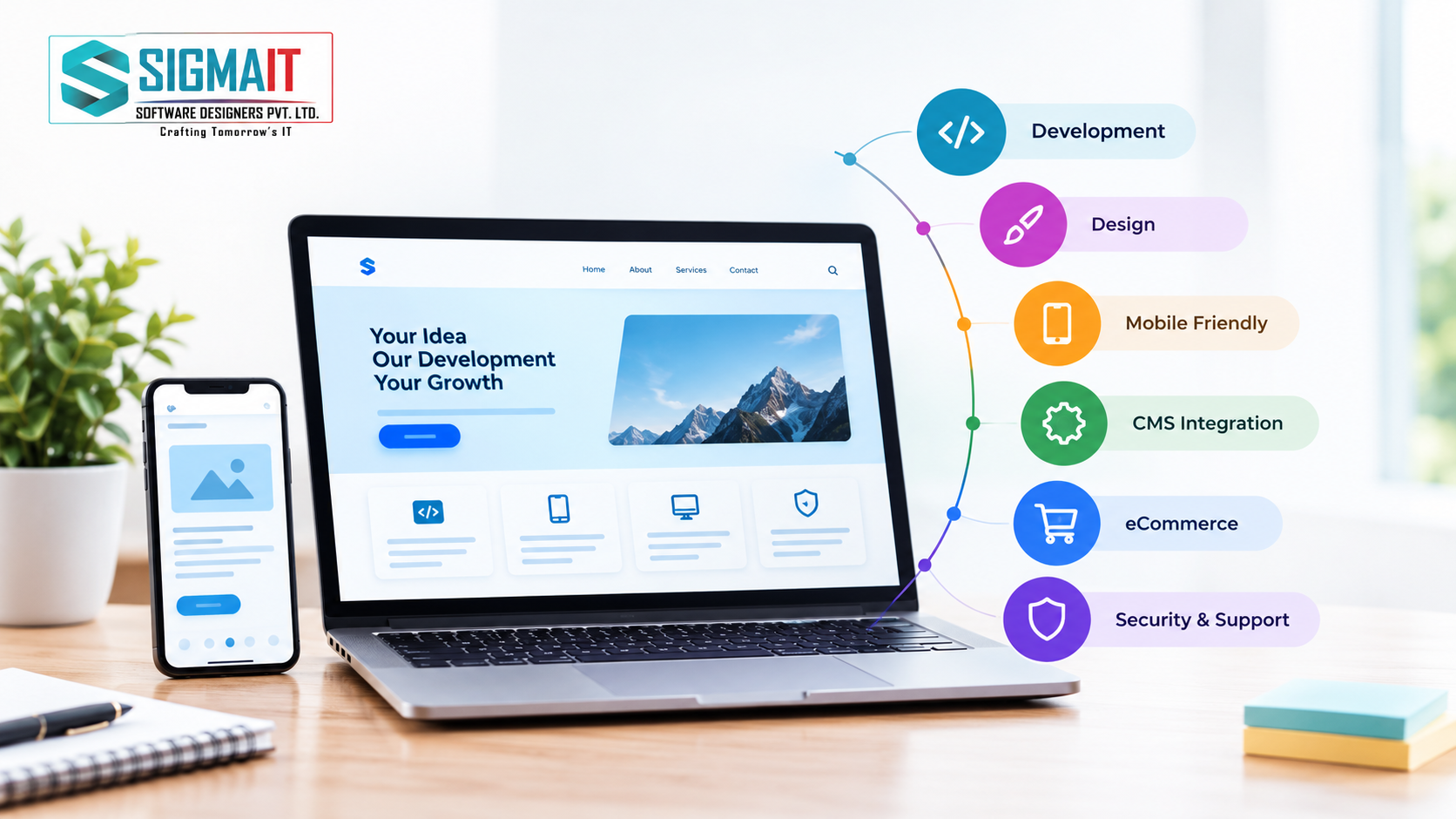
Website development includes the work required to build and maintain a website. Depending on the project, the process may include website planning, UI design, front-end and back-end development, database integration, CMS setup, eCommerce development, security, performance optimization, and technical support.
The requirements can differ from one business to another. A local service provider may need a simple business website, while an online store may require product management, payment gateways, customer accounts, and order tracking. A good development package should therefore be planned around the actual goals and requirements of the business.
1. Website Planning and Requirement Analysis
Every website project should begin with proper planning. The development team first needs to understand the business, its services, target audience, competitors, and goals.
The required pages, features, navigation structure, and technical requirements can then be decided. For example, a service-based business may need service pages, enquiry forms, and location pages. An eCommerce business may need product categories, shopping carts, payment options, and order management. Good planning creates a clear direction for the entire project and helps avoid unnecessary changes later.
2. UI and Website Design
Website design determines how the website looks and how easily visitors can use it. A good design should make important information easy to find without making the page look crowded.
The design process can include page layouts, menus, buttons, forms, images, fonts, colors, and other visual elements. The overall design should also match the company's brand and create a consistent experience across the website. A responsive design should be considered from the beginning so that the website works properly on mobile phones, tablets, laptops, and desktop computers.
3. Front-End Development
Once the design is approved, developers turn it into a functional website. Front-end development focuses on everything visitors see and interact with. Menus, buttons, forms, images, sliders, product sections, landing pages, and other interactive elements are developed during this stage. Technologies such as HTML, CSS, and JavaScript may be used according to the project's requirements. A properly developed front end makes navigation easier and helps visitors interact with the website without unnecessary complications.
4. Back-End Development
Back-end development handles the functions that work behind the website. It connects the website with databases and supports features that visitors may not see directly.
For example, a website may need user registration, login systems, enquiry management, dashboards, payment processing, or custom business functions. Developers create and connect these features according to the project's requirements. Businesses that need specific functionality can also choose custom website development instead of relying only on standard features.
5. CMS Integration
Many businesses need to update their website regularly. A Content Management System (CMS) makes these updates easier. With a CMS, authorized users can add or edit pages, publish blog posts, upload images, update products, and manage other website content without changing the website code every time.
WordPress is a popular CMS option, but other platforms can also be used. The right platform should be selected based on the website's size, features, budget, and future requirements.
6. E-commerce Website Development
An online store requires several features that a standard business website may not need. Customers should be able to browse products, add items to a cart, make payments, and check their order details easily.
E-commerce website development can include product pages, categories, filters, shopping carts, checkout pages, payment gateways, customer accounts, order management, and inventory-related features. Additional features such as product reviews, discount codes, wish lists, and advanced search can also be added when required.
7. Mobile-Friendly Development
Many people access websites through smartphones, so a website should work well on smaller screens. Responsive development allows the layout to adjust automatically according to the device and screen size. Developers can optimize menus, images, buttons, forms, text, and other elements for mobile users. This prevents visitors from having to zoom in or deal with poorly arranged content. A mobile-friendly website also provides a more consistent experience across different devices.
8. Website Speed Optimization
Website speed can directly affect the browsing experience. When pages take too long to load, visitors may leave before they find the information they need. Developers can improve website performance by compressing images, reducing unnecessary code, optimizing scripts, using caching, and improving other technical elements. The right approach depends on the website structure, hosting environment, content, and technologies being used. Performance should also be monitored after major updates.
9. Website Security
Security should be considered throughout the development process. A website may handle business information, customer details, login credentials, payment information, or other important data.
Developers can implement SSL certificates, secure forms, access controls, software updates, backups, and other appropriate security measures. Websites that handle payments or customer accounts may require additional protection. Regular updates and reliable backups should also be maintained after the website goes live.
10. SEO-Friendly Development
A website should be easy for both visitors and search engines to understand. SEO-friendly development creates a technical foundation that can support future search optimization. Developers can work on clean URLs, proper heading structures, mobile responsiveness, image optimization, page speed, internal navigation, and crawl-friendly website structures.
These practices do not guarantee higher rankings on their own. However, they can help create a technically sound website that can be optimized further through content, links, local SEO, and other SEO activities.
11. Website Testing
Testing should be completed before a website is launched. Developers need to check whether all important features work correctly and whether visitors can navigate the website without problems. Forms, buttons, links, menus, images, login systems, payment functions, and other features should be tested. The website should also be checked on different browsers and screen sizes. Thorough testing can help identify and fix problems before they affect real users.
12. Website Maintenance and Support
A website may need attention even after it has been launched. New content, security updates, technical fixes, performance improvements, and additional features may be required over time. Website maintenance services can help keep the website updated and functional. Regular backups, software updates, security checks, and technical support can also reduce the chances of avoidable problems. As a business grows, new pages, integrations, or features can be added to support changing requirements.
Choosing the Right Website Development Company
Choosing the right development partner can make the website development process easier. Businesses should look at the company's experience, development expertise, previous projects, technologies, communication process, and post-launch support.
For businesses looking for website development services in Lucknow, India, SigmaIT Softwares provides website development solutions based on different business requirements. From business and eCommerce websites to custom website development, the team can help businesses plan and develop websites around their services, products, target audience, and required functionality. The focus is kept on creating websites that are easy to use, responsive, functional, and suitable for long-term business needs.
Instead of selecting a package only because it includes a large number of features, businesses should first identify what their website actually needs. This approach can help avoid unnecessary costs and make the development process more focused.
What Should You Check Before Choosing Website Development Services?
Every business has different requirements, so the right website development service will depend on the type of website and business goals. A small business may only need a few informative pages and an enquiry form, while an eCommerce company may require a complete online shopping system.
Before choosing a service provider, check what is included in the proposal. Page limits, design revisions, CMS access, integrations, hosting, security, SEO support, maintenance, and post-launch support should be clearly discussed. The technology used, development timeline, website ownership, scalability, and future support should also be discussed before the project begins.
Planning the Right Website Development Approach
A complete website development service can include much more than design and coding. Planning, UI design, front-end and back-end development, CMS integration, eCommerce features, mobile optimization, speed improvements, security, SEO-friendly development, testing, and maintenance can all contribute to a successful website.
The right website development services should be selected according to the business's requirements, audience, budget, and plans. When these factors are considered from the beginning, a website can be built to provide a better user experience and support long-term business growth. For businesses searching for website development services in Lucknow, SigmaIT Softwares can be considered for website development based on specific business and technical requirements.