Microfinance Software vs Manual Loan Management
by
SigmaIT Softwares
Posted on 9/29/2026 7:13:27 PM
Loan management often begins with a simple process. A customer submits an application, the team verifies the details, the loan gets approved, and repayments are recorded over time. However, as the number of borrowers, branches, and transactions increases, managing every stage manually becomes considerably more difficult. Teams may have to maintain spreadsheets, physical documents, registers, and separate payment records while constantly checking whether the information matches.
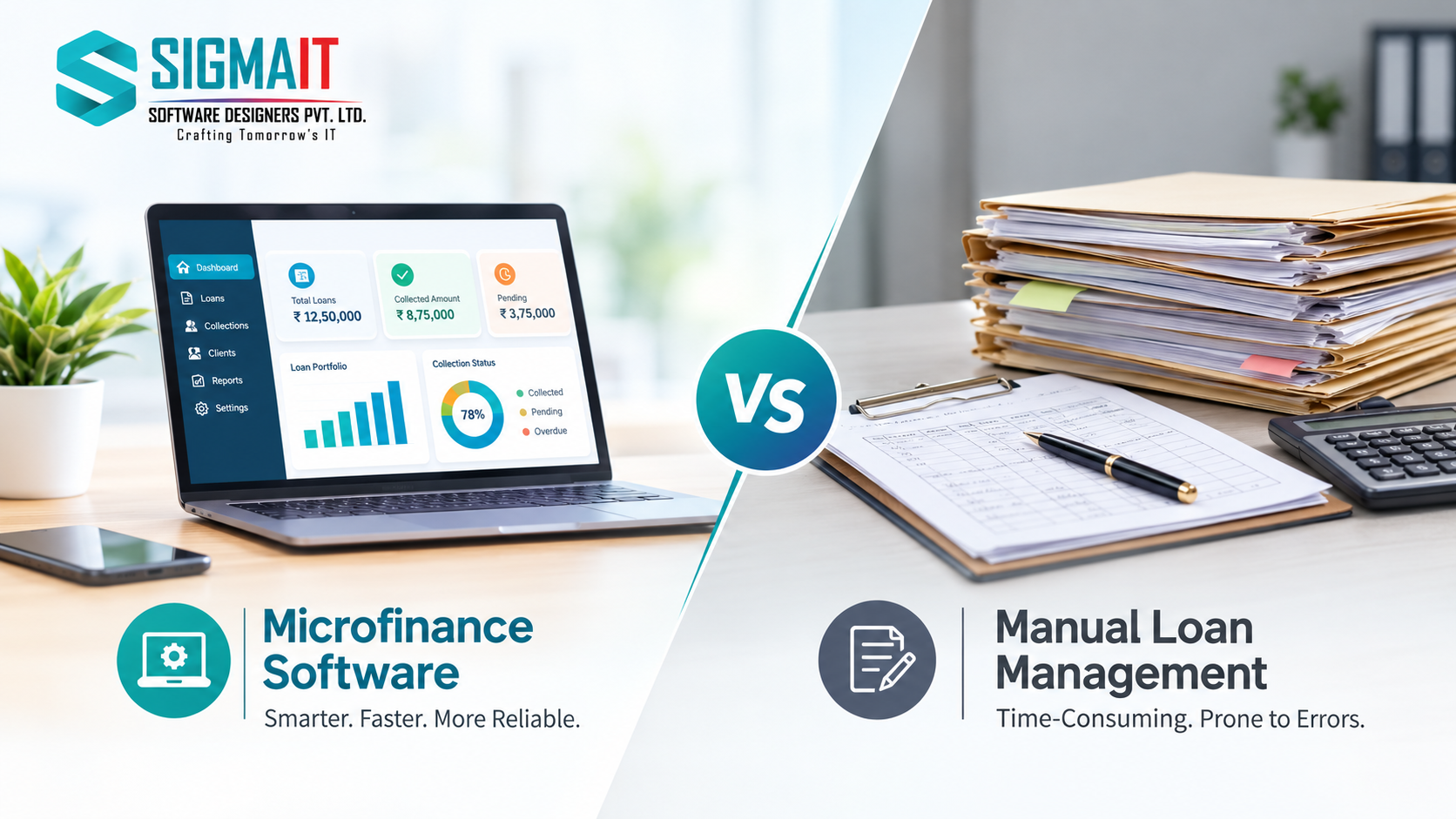
This is where the difference between Microfinance Software vs Manual Loan Management becomes important. Both approaches can support lending operations, but they handle information, workflows, collections, and reporting very differently. Understanding these differences can help a microfinance institution decide when its existing process needs a more centralized and structured approach.
What Is Manual Loan Management?
Manual loan management typically relies on spreadsheets, paper files, registers, emails and other disconnected methods to record borrower information and track loan activities. Employees may enter customer details separately, maintain repayment schedules in spreadsheets and keep physical copies of supporting documents.
For a small operation with limited borrowers, this approach may initially seem manageable. However, every additional customer creates more information to maintain. Consequently, employees have to spend more time entering data, checking records and preparing reports. If different teams maintain different files, keeping information consistent can become even more challenging.
What Is Microfinance Software?
Microfinance Software provides a centralized digital environment for managing customer information, loans, repayments, collections and related financial operations. Instead of maintaining each activity separately, organizations can connect different stages of the lending process within one system.
A modern Microfinance Management Software solution can support customer and KYC management, Loan Origination System (LOS), Loan Management System (LMS), digital documentation, disbursement, collections, accounting, and MIS reporting. Depending on operational requirements, organizations can also incorporate mobile applications, payment integrations, and additional financial services.
Microfinance Software vs Manual Loan Management for Data Management
Data management represents one of the clearest differences between the two approaches. With manual processes, employees often enter and update information in multiple locations. A customer record may exist in a physical file, a spreadsheet, and a separate accounting record. If one record changes and another does not, the organization can end up working with inconsistent information.
Microfinance Software keeps relevant customer and loan information within a centralized system. Authorized users can access the required records according to their roles, while customer details, loan information, and transaction history remain connected. Therefore, teams can spend less time searching for records and more time handling actual operational work.
Managing Loan Applications and Approvals
Manual loan processing can involve several steps, including application entry, document verification, approval, and record preparation. When employees coordinate these activities through emails, spreadsheets, or physical files, they may need to follow up repeatedly to determine the current status of an application.
A Microfinance Software solution can structure these processes through configurable workflows. LOS functionality can support loan application and processing activities, while rules-based workflows can guide applications through applicable stages. Task frameworks and automatic task allocation can also help assign activities to the appropriate users.
Microfinance Software vs Manual Loan Management for Disbursement
Loan disbursement requires accurate information because an error can affect both the customer and the institution's financial records. Manual processes may require employees to enter transaction information separately into different systems or documents, increasing the amount of reconciliation work.
Digital loan management software can support cashless disbursement through multiple bank accounts and can incorporate applicable payment methods such as prepaid cards. By connecting disbursement information with the relevant loan record, the organization can maintain a more organized transaction history.
Managing Repayments and Collections
Repayment management becomes increasingly complex as an institution handles more borrowers. Field employees may collect payments, update records, and submit information to office teams. With manual systems, delays between collection and record updates can make it harder for managers to understand the current collection position.
Microfinance Software can support collection applications and digital repayment methods such as UPI, payment links, eNACH, and Standing Instructions. Field teams can record relevant collection information digitally, while managers can use centralized records to monitor repayment activities and outstanding amounts.
Documents, KYC and Record Keeping
Loan management involves considerable documentation. Customer identification documents, applications, agreements, receipts and other records need to remain accessible throughout the loan lifecycle. Maintaining these records entirely on paper can require considerable storage and administrative effort.
A digital platform can integrate scanned documents and support data extraction from applicable documents. Automatic document generation, digital receipts and eSignatures can further reduce dependence on paper-based processes. As a result, employees can locate relevant records more easily while maintaining a digital history of applicable transactions and activities.
Reporting and Accounting: Manual vs Digital
Management teams need timely information to understand loan performance, collections, cash movement and other financial activities. Under a manual approach, employees may spend considerable time compiling information from spreadsheets, registers and separate systems before preparing a report.
A centralized Microfinance Software platform can support MIS reporting, real-time accounting, cash management and reconciliation. This does not remove the need for financial controls or review, but it can organize the underlying information and reduce repetitive data compilation. API-based and file-based processing can also support applicable transaction flows and integrations.
Scalability and Operational Flexibility
Manual processes may work when an organization has a small number of customers and limited operational activity. However, adding branches, users, loan products or collection teams increases the volume of information that employees need to maintain.
Microfinance Software can support multiple users, branches and operational activities through a centralized platform. Organizations can also configure workflows and add relevant modules as their requirements change. Mobile and web extensions can support field teams, while additional services such as Micro-ATM, Domestic Money Transfer, RD and FD origination, recharge and bill payment can be incorporated where required.
When Should an MFI Consider Microfinance Software?
There is no single point at which every microfinance institution must replace manual processes. Instead, organizations should look at the operational problems they experience. Frequent data duplication, delayed reports, difficulty tracking repayments, growing documentation requirements and increasing reconciliation work can indicate that the existing process needs greater structure.
At the same time, adopting software should begin with the organization's actual requirements. Before selecting a Microfinance Software Company, an MFI should understand its loan workflow, collection process, number of users, branch structure, payment requirements, reporting needs and integration requirements. This helps the organization select or customize a system around its operations rather than changing every process to fit the software.
Conclusion: Choosing the Right Loan Management Approach
The comparison between Microfinance Software vs Manual Loan Management is ultimately about how an organization handles increasing operational complexity. Manual methods can support basic processes, but they require greater human involvement as customer numbers, transactions and branches increase. A centralized software solution can connect loan processing, documentation, disbursement, collections, accounting and reporting within a structured environment.
For an MFI considering a transition, the practical starting point is to map the current loan lifecycle and identify where employees spend the most time on repetitive data entry, document handling, collection updates and reporting. From there, the organization can determine which processes need automation and which software capabilities are genuinely required. A customizable Microfinance Loan Management Software solution can then be evaluated according to those specific operational needs