android vs ios app development which is better
by
SigmaIT Softwares
Posted on 5/1/2026 5:55:21 PM
Android vs iOS App Development: Which is Best for Your Business in 2026?
The demand for mobile app development in India is growing rapidly as businesses move online to reach a wider audience. From startups to established brands, companies are investing in apps to improve customer engagement and boost revenue. However, one of the biggest decisions is choosing between Android vs iOS app development.
Selecting the right platform directly impacts your budget, user reach, and long-term growth. Android dominates the Indian market due to its affordability and wide user base, while iOS holds strong globally with high-paying users and premium experiences.
Both platforms have unique strengths, making it important to align your choice with your business goals. This guide will help you understand the key differences, costs, and benefits of Android and iOS app development in India, so you can confidently choose the best platform for your app success.

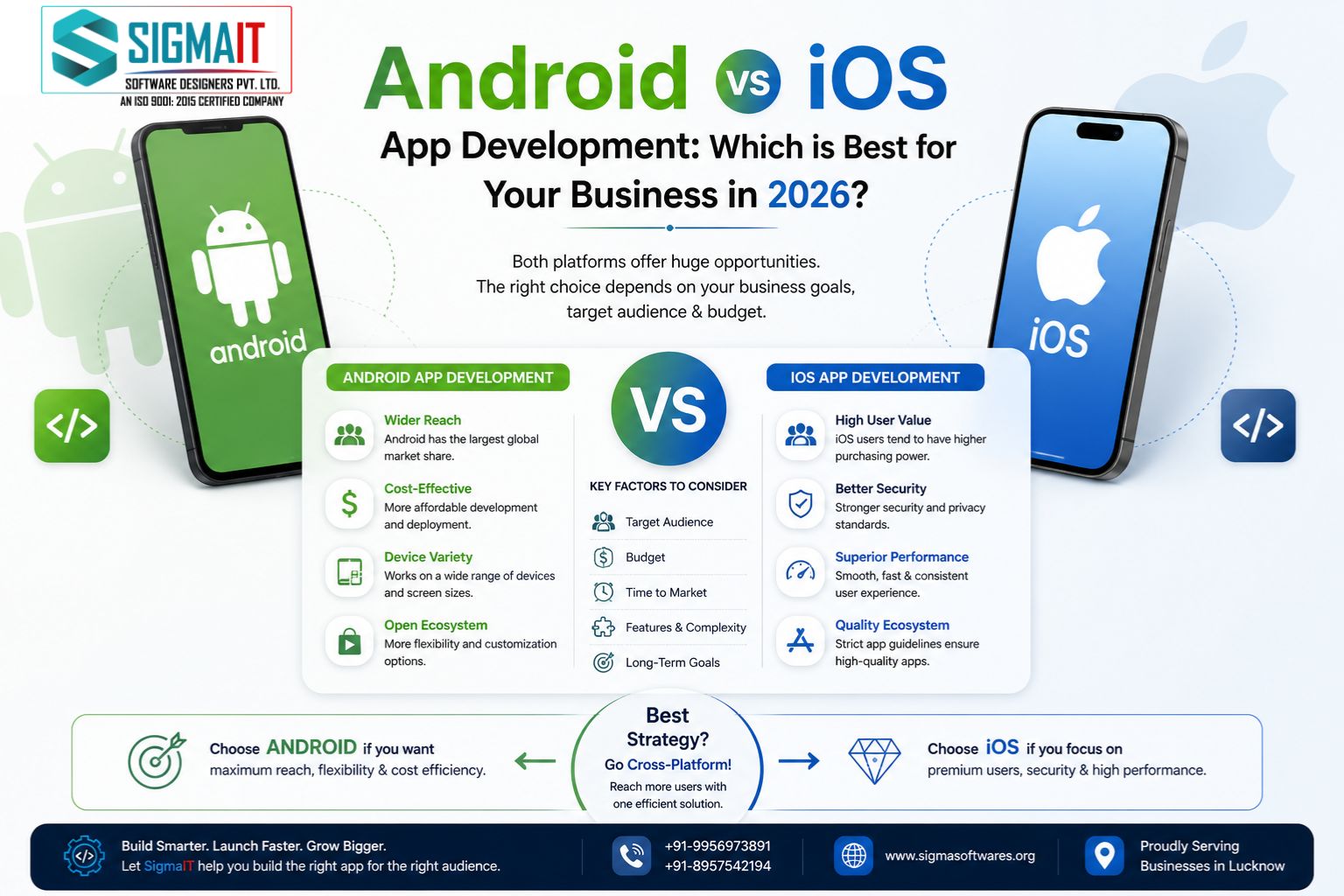
Android vs iOS App Development – Quick Comparison
Choosing between Android vs iOS app development depends on factors like budget, audience, and goals. While Android offers wider reach, iOS focuses on premium users and better monetization. Below is a quick comparison to help you understand the core differences easily.
Key Differences at a Glance:
| Factor |
Android |
iOS |
| Market Share (India) |
Very High |
Moderate |
| Development Cost |
Lower to Medium |
Medium to High |
| User Base |
Mass audience |
Premium audience |
| Revenue Potential |
Lower per user |
Higher per user |
| App Approval |
Faster |
Strict & time-consuming |
| Devices |
Wide range |
Limited (Apple only) |
Android App Development – Benefits & Limitations
Android app development is popular in India due to its wide reach and flexibility. It supports multiple devices and price ranges, making it ideal for businesses targeting a large audience. However, it comes with challenges like device fragmentation and higher testing efforts.
1. Advantages of Android App Development
Android offers a massive user base in India, making it ideal for startups and local businesses. It allows easy customization, faster publishing on the Play Store, and supports multiple devices. This flexibility helps businesses scale quickly and reach diverse customer segments.
-
Wider market reach across urban and rural users
-
Flexible customization with open-source framework
-
Multiple device compatibility including budget smartphones
-
Easy app publishing with fewer restrictions
2. Disadvantages of Android App Development
Android development can be complex due to device fragmentation and multiple screen sizes. Testing requires more time and cost. Security risks are slightly higher, and app performance may vary across devices, which can impact user experience if not optimized properly.
-
Device fragmentation increases testing time
-
Higher development cost due to multiple screen sizes
-
Security concerns compared to iOS
-
Lower monetization rate in some segments
iOS App Development – Benefits & Limitations
iOS app development is known for delivering premium performance and strong security. It is ideal for businesses targeting high-end users and global markets. With fewer devices to support, development is smoother, but the audience size is smaller in India.
1. Advantages of iOS App Development
iOS apps offer better performance, strong security, and a smooth user experience. Users are more likely to spend on apps, making it ideal for monetization. Development is faster due to limited devices, and Apple’s ecosystem ensures consistent quality across apps.
-
High revenue potential from premium users
-
Better app performance and optimization
-
Strong security features
-
Uniform device ecosystem simplifies development
2. Disadvantages of iOS App Development
The biggest limitation is the smaller user base in India. Apple’s strict app approval process can delay launches. Development costs may be higher due to Apple’s ecosystem requirements, and businesses targeting mass users may find limited reach compared to Android.
-
Limited market share in India
-
Strict app approval process
-
Higher entry barrier for developers
-
Expensive devices limit user base
Android vs iOS App Development Cost in India
The app development cost in India depends on features, complexity, and platform choice. Android apps may cost more due to extensive testing across devices, while iOS apps benefit from a controlled ecosystem, reducing development effort in some cases.
1. Cost Breakdown for Android Apps
Android app costs typically range from ₹80,000 to ₹10+ lakhs depending on complexity. Higher testing efforts, multiple device compatibility, and UI adjustments increase the overall development time and cost.
2. Cost Breakdown for iOS Apps
iOS app development usually ranges from ₹1 lakh to ₹12+ lakhs. Costs depend on features and design quality. Since Apple devices are limited, testing is easier, which can balance development expenses.
3. Which Platform is More Budget-Friendly?
If you are targeting a large audience with a limited budget, Android is often more cost-effective. However, for premium users and better ROI, iOS may deliver higher value despite slightly higher initial investment.
Android vs iOS User Base in India
Understanding the mobile app user base in India helps in choosing the right platform. Android dominates with a massive share, while iOS caters to a niche but high-value audience.
1. Android Market Share in India
Android holds over 90% market share in India, making it the best choice for businesses targeting mass users. It is widely used across all regions due to affordable smartphones and easy accessibility.
2. iOS User Segment in India
iOS users in India belong to premium segments, mostly in metro cities. They have higher purchasing power, making them ideal for subscription-based apps and high-end services.
Revenue Potential – Android vs iOS
When it comes to app monetization, both platforms offer different advantages. Android generates revenue through ads and large user volume, while iOS focuses on in-app purchases and subscriptions.
1. Which Platform Generates More Revenue?
iOS generally generates more revenue per user due to higher spending habits. Android relies on scale, meaning revenue comes from a larger user base rather than individual spending.
2. Best Platform for Different Business Models
Android is ideal for ad-based and mass-market apps. iOS works best for premium apps, subscriptions, and paid services. Choosing the right platform depends on your revenue strategy.
App Development Time – Android vs iOS
The mobile app development timeline varies based on platform complexity. Android apps take longer due to device testing, while iOS apps are quicker to build and optimize due to fewer devices and standardized guidelines.
Development Speed Comparison: iOS apps are generally faster to develop and test. Android requires additional time for compatibility checks across devices, which can extend the development timeline.
Android vs iOS Security Comparison
Security plays a key role in mobile app development, especially for fintech and e-commerce apps. Both platforms offer strong security, but their approach differs significantly.
1. iOS Closed Ecosystem Advantage
iOS has a closed ecosystem, meaning apps go through strict security checks. This reduces malware risks and ensures better data protection, making it a preferred choice for secure applications.
-
Strict app review process ensures quality
-
Limited device ecosystem reduces vulnerabilities
-
Strong data privacy policies
-
Controlled app distribution enhances safety
2. Android Security Improvements
Android has improved significantly with regular updates and Google Play Protect. However, its open ecosystem still makes it slightly more vulnerable compared to iOS.
-
Google Play Protect enhances security
-
Regular updates improve safety
-
Advanced permission controls
-
Improved encryption features
3. Which is Safer for Users and Businesses?
iOS is generally considered safer due to strict control and policies. Android is also secure if best practices are followed, but requires extra attention to data protection.
UI/UX Design Differences Between Android and iOS
The UI/UX design in mobile apps differs based on platform guidelines. Android and iOS follow different design systems, impacting user experience and engagement.
-
Material Design (Android) vs Human Interface Guidelines (iOS)
-
Android offers more flexibility, while iOS focuses on consistency
-
iOS users expect smooth animations and minimal design
-
Android users prefer customization and variety
-
Better UI/UX leads to higher engagement and conversions
When Should You Choose Android App Development?
Choose Android app development if your goal is to reach a large audience across India. It is ideal for startups, e-commerce platforms, and businesses targeting tier-2 and tier-3 cities. Android is also suitable when you want flexibility, customization, and integration with multiple devices. If your app relies on ads or mass adoption, Android is the right choice.
When Should You Choose iOS App Development?
Go for iOS app development if your target audience is premium users. It works best for businesses offering high-end services, subscriptions, or luxury products. iOS is also ideal when you want better security, faster development, and higher revenue per user.
Should You Build for Both Platforms? (Cross-Platform Strategy)
Building apps for both platforms ensures maximum reach and revenue. A cross-platform strategy helps businesses save time and cost while targeting both Android and iOS users.
1. Benefits of Cross-Platform Development
Cross-platform apps reduce development time and cost. They allow businesses to launch faster on both platforms while maintaining consistent functionality and design.
2. Popular Technologies
Technologies like Flutter and React Native are widely used for cross-platform development. They help create apps for both Android and iOS using a single codebase.
Android vs iOS – Final Verdict
There is no one-size-fits-all answer in Android vs iOS app development. Android is best for reach and affordability, while iOS excels in revenue and performance. The right choice depends on your business goals, audience, and budget.
-
Flutter: Fast, flexible, and UI-friendly
-
React Native: Widely used and scalable
-
Xamarin: Strong Microsoft support
-
Kotlin Multiplatform: Modern and efficient
Conclusion
Choosing between Android and iOS app development in India depends on your target users and business strategy. Android offers scale, while iOS delivers quality and revenue. For best results, analyze your goals and consider starting with one platform, then expand. A smart approach ensures long-term success in the competitive app market. SigmaIT software is the top leading mobile app development company that offers most reliable services.
Ready to build your mobile app? Partner with SigmaIT to choose the right platform and transform your idea into a powerful, high-performing digital product.
Get a free consultation today!
FAQs About Android vs iOS App Development
Q 1. Which is better: Android or iOS app development for startups in India?
Ans. For most startups in India, Android app development is a good starting point because it offers a larger user base and lower initial cost. It helps businesses reach more people quickly, especially in tier 2 and tier 3 cities. However, if your target audience includes premium users, iOS can also be a smart choice.
Q 2. What is the difference between Android and iOS app development?
Ans. The main difference lies in the platform, tools, and audience. Android apps are built using languages like Kotlin or Java and run on many devices. iOS apps are developed using Swift and run only on Apple devices. Android offers flexibility, while iOS focuses on performance and a premium user experience.
Q 3. Is Android app development cheaper than iOS in India?
Ans. Yes, Android app development is usually more budget-friendly in India. This is mainly because of flexible development options and a wider pool of developers. However, the final cost depends on app features, complexity, and design requirements, so both platforms can vary in pricing based on your needs.
Q 4. Which platform has more users in India: Android or iOS?
Ans. Android has a much larger user base in India compared to iOS. This is because Android smartphones are available in different price ranges, making them accessible to a wider audience. iOS users are fewer but are generally from higher income groups and spend more on apps.
Q 5. Which platform generates more revenue: Android or iOS apps?
Ans. iOS apps generally generate higher revenue per user because Apple users are more likely to pay for apps and subscriptions. On the other hand, Android apps earn well through ads and a larger audience base. The best platform depends on your business model and monetization strategy.
Q 6. How long does it take to develop an Android vs iOS app?
Ans. The development time depends on the app’s features and complexity. Android apps may take slightly longer because developers need to test them on multiple devices. iOS apps are usually faster to build due to limited device types and a more controlled development environment.
Q 7. Which platform is more secure: Android or iOS?
Ans. iOS is often considered more secure because of Apple’s strict app review process and closed ecosystem. Android has improved its security over time, but developers need to take extra steps to protect data. Both platforms can be secure if proper practices are followed.
Q 8. Should I build both Android and iOS apps at the same time?
Ans. If your budget allows, building apps for both platforms is a great strategy to reach a wider audience. Many businesses start with one platform and later expand. You can also use cross-platform technologies to develop apps for both Android and iOS together and save time and cost.
Q 9. Which platform is better for e-commerce app development in India?
Ans. For e-commerce apps, both Android and iOS are important. Android helps you reach a large audience, while iOS brings in users who are more likely to spend. A balanced approach, where you gradually build for both platforms, usually works best for long-term growth.
Q 10. How do I choose the right platform for my mobile app?
Ans. To choose the right platform, consider your target audience, budget, and business goals. If your focus is reach and affordability, go for Android. If you want premium users and higher revenue per customer, iOS is a better option. A clear strategy will help you make the right decision.